

Marco Polo, the famous explorer, visited China and became known in Europe in the 13th century. Chinese culture began 5,000 years ago, and China led the world in literature, the arts, sciences, technology, and philosophy.
The current population of China is over 1.4 billion, making it the biggest country in the world. Over 30 million people live in caves. China has a multi-religious population, but the most popular religions are Taoism, Confucianism, Buddhism, Christianity, and Islam. It is also one of the most linguistically diverse countries in the world, with a total of 302 languages spoken, according to the ethnographic survey.
Nina and Yanni, who asked that only their first names be used for this article, are from China and moved to Chicago with their families. They are students at the College of Lake County, studying English. Yanni is from Beijing, the capital of China, and Nina is from Chengdu, a city in southwest China. They shared that they try to adapt to American culture, which is different from the Chinese lifestyle.
“In China, we always think about the group and greatly respect old people. We pay more attention to what other people think and care about honor,” Nina said. “In the U.S.A., people are more independent and speak their minds.”
Yanni responded, “The parents in the U.S.A. encourage their children more about their education or their future than Chinese parents, who tend to coach their kids on what they can do.”
They also shared that there are differences between the northern, southern, eastern, and western regions of China are based on the environment, climate, and weather.

People in the east like to eat seafood because they live near the sea and fish for a living. In the west, people are farmers because they live in the mountains. On the other hand, up in the north, the climate is cold and dry, so people use more wheat flour than rice. Meanwhile, in the south, the primary crops are rice and meat.
They also mentioned that all these regions have a variety of foods and languages.
“In Beijing, there are 5 traditional plates from ancient times: Beijing roast duck from the Yuan Dynasty [which ruled from] 1271 to 1368; Joaozi food has a history of over 1,800 years; Zhajiangmian, a classic food from old Beijing; Manchu Han imperial feast from the Qing Dynasty; and Beijing Hot Pot from the Yan Dynasty. All of these plates are not spicy.” Yanni said.
Meanwhile, Nina said that in 2011, her city, Chengdu, was recognized by UNESCO as a city of gastronomy.
“Our food is very spicy but also has many different flavors,” she said. “In my city, people love to eat together. Hot pot is our favorite.”
Nina also said that hot pot is not only food, but it is also a way to eat and drink tea with friends and family as a way to spend time together.
When asked about the languages they speak, Nina said that they both speak Mandarin but speak Sichuanese.
“[It] sounds different compared to other places in China,” she shared.
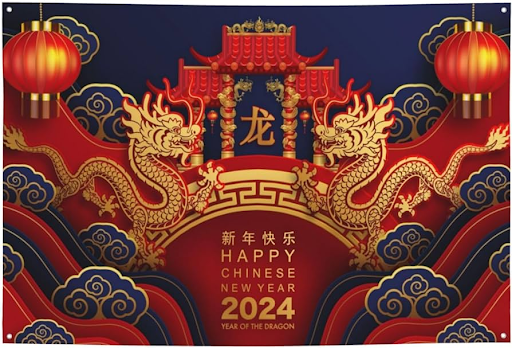
They also talked about their customs; they shared that Chinese folklore and mythology use the symbolism of the legendary animal, the dragon, to demonstrate power, success, and good fortune.
In ancient times, they believed that there were four types of dragons that controlled typhoon seasons, rainfall, and floods. These dragons are known as the “Yellow Dragon, Black Dragon, Pearl Dragon, and Long Dragon.”
“My city has a long history full of myths, stories, and legends of the Chinese Emperors,” Yanni said.
According to the belief, emperors were related to dragons, which is why it is the most popular zodiac sign. It is also symbolic to Chinese New Year as the people celebrate it by participating in activities such as watching lion and dragon dances, setting off firecrackers, and lighting fireworks.
In China, there are nine different types of traditional dances: court dance, Prince Qin’s cavalry, Nichang Yuyi, ribbon dance, dai dance, Tibetan dance, Mongolian dance, miao dance, and lion dance. Each dance has various meanings based on the time it is performed.
The oldest dances are the dragon dance, which represents power, strength, and good luck, and the lion dance, which symbolizes power, wisdom, and superiority. Both dances were performed by earlier dynasties.
On the other hand, Chinese opera is a type of theater that combines singing, acting, fine arts, kung fu, acrobatics, and elaborate costumes.
The topics of Chinese opera are from Chinese history, mythology, and literature. It has 368 different forms. The popular types of operas are Peking opera, Kun Qu, local operas, and theater. The best known of them is Beijing opera, which was performed in the Qing dynasty, which ruled from 1644–1911.

Meanwhile, the most popular traditional Chinese clothing includes Hanfu, Qipao, Zhongshan Suit, and Tang Suit. These costumes portray Chinese aesthetics, philosophy, and social values through over 3,000 years of history.
Even in modern times, Yanni and Nina still wear traditional Hanfu-style clothing.
“The Hanfu is the oldest of China’s folk costumes. It can be traced back to 4,000 years. This style was discovered by the Yellow Emperor’s consort, ‘Leizu’, who was the goddess of sericulture, [which is] the development of cultivating silkworms and taking out silk from them,” Yanni said. “Also, she was a good dressmaker.”
The Qipao is a different style of Hanfu clothing. It comes from Manchu women of the Qing Dynasty, which ruled from 1644–1912, and symbolizes luck, fortune, happiness, and longevity.
The Tang Suit was developed during the Tang Dynasty, which lasted from 618–907 and was famous for its prosperity and power in the world. The Zhongshan suit, or Mao suit, is a style of men’s jacket that is elaborated on the Ming Dynasty’s Hanfu.
Nina and Yanni encourage CLC students and faculty to visit their country to see all the wonderful places, taste the traditional Chinese cuisine, and experience the magic of the ancient world by walking through the Great Wall.
Discover more from The Chronicle
Subscribe to get the latest posts sent to your email.







This article is a comprehensive and insightful exploration of Chinese culture, highlighting its rich history and traditions. The author skillfully weaves together historical facts, personal anecdotes, and cultural practices to create a vivid picture of China’s cultural heritage. The inclusion of Nina and Yanni’s experiences adds a personal touch, making the content more relatable and engaging. The detailed descriptions of traditional dances, opera, and clothing provide a deeper understanding of the significance of these cultural elements. Overall, the article is well-written and offers readers a valuable insight into the diverse and fascinating world of Chinese culture.
Thank you Katerina, it makes me jump back into my hometown. It’s a great feeling! Thank you again! Love you!
Hi I am Yanni, I am in the article. Thank you for read the article. I am so glad to my friends Katerana wrote this article about my country. And so appreciate that you read it. It is great way to introduce my country and my city.