


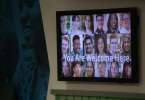
Sadie’s first day in London. Photo by Sadie Saller.
Who gets to study abroad? For a long time, I thought I knew the answer: people who can afford it.
We often envision studying abroad as a new experience, perhaps a way to grow our independence and our resumes. In some cases, it may even be considered a networking or vacation opportunity. Because of these labels, studying abroad can often appear overwhelming; reserved for people who already have the money, confidence, and freedom to leave home.
I used to think that way.
As a young girl, I dreamed of traveling to the places that I read about in books. Not only for the sake of traveling itself, but for the sake of learning and seeing beauty with my own eyes. Yet our dreams can feel very different when they are exposed to reality. Health, family, and financial concerns discouraged me. I ultimately came to believe that a journey like the one that I had always imagined would be impossible.
Last year, I saw an advertisement for the College of Lake County’s British Literature study abroad program. Unbeknownst to me, that advertisement would eventually lead me to London, and my experience there would change my understanding of what studying abroad actually means.

After my experience, I now believe that studying abroad is more than just a luxury reserved for those who can afford it. Instead, it is an invaluable education that cannot be found in a classroom.
The first hurdle that I faced in my path to studying abroad was a common one – financial hardship. I would not have been able to pursue global travel without financial aid. Until I was guided to the right resources, I did not realize that this kind of help was within reach.
Like me, you may never have heard of the Benjamin A. Gilman International Scholarship Program before. The Gilman is offered by the U.S. Department of State, and it is both need-based and merit-based. It provides up to $5,000 in scholarships to American undergraduate students who wish to study abroad, whether it be for a short term trip (like mine) or a long term internship. Students must be Pell Grant recipients during the time of their application, and the basic submission process requires four 500 word essays.
Thanks to this program, I was able to travel to England for twelve days to study the literary icons that I had loved for years.
This financial assistance was only the beginning.
Although the process of applying and preparing to study abroad is intimidating, CLC’s Department of Global Engagement has a support system in place that assists with some of the other barriers students might face. Thanks to an on-campus advisor, I was able to finish my application to the Gilman in less than two months, all while taking six classes. Between additional scholarship opportunities, scholarship advisors, and free passport photos, students are given the tools to succeed internationally.

On Wednesday, Dec. 3, 2025, I received an email from the Gilman Program that I will remember forever. They had made their decision and would be covering more than half of my study abroad program’s cost.
I remember walking into class and simply sitting in shock until some of my classmates asked me if I was alright.
It didn’t feel real.
What I have loved about the Gilman Program is that it doesn’t just offer financial support, but also personal and ongoing advice long after travel is complete. You are a Gilman Scholar for life. For me, that support was important because I was stepping onto an eight-hour plane ride after not having traveled outside of Illinois for at least 10 years.
Part of being a Gilman Scholar is completing a follow-on service project after returning home. Applicants can pitch their idea for a follow-up project in one of their four essay submissions. I chose to document my experiences and share them with others, both to provide information about the Gilman Program and to encourage other people to pursue educational opportunities around the globe.
It was through this experience of documentation that I began to understand just how important studying abroad is, and how often we misconstrue it for something that it is not.
When you are across an ocean, even small differences become opportunities to learn.
The class and trip funded by the Gilman Program were especially meaningful to me. I grew up drawing before I could read, being read to before I could write, and writing as soon as I learned how. In our British Literature class, we pored over the writing of the same authors that we would soon be “walking with” in London.
I can’t quite describe the feeling that I had when I stood where Jane Austen stood, or touched the same chair that Virginia Woolf wrote in. The only word that I can come up with is holy.


I don’t use the word holy quite in the religious sense, but in the meaning that my time there and the space there was set apart and consecrated just for that single moment.
There was a connection and an empathy that studying abroad formed within me that was profound. When I was in Jane Austen’s home, I wept, and I met other people from across the world who had been just as touched by her work as I had been. I was able to share experiences and differences from the United States with the people around me, and I myself learned new words and customs such as saying “takeaway” for take-out box and “knackered” for tired.
As an artist, one of my goals through the Gilman Program was to create and give my art away to locals within the community. Providentially, our hotel connected us to the central community of London through two cafes that we could walk to and receive breakfast from.
During our last few days in England, I gifted both of the cafe owners a pen and ink and watercolor painting of their shops. One of the owners was touched to the point of tears, and I too was incredibly affected.
It was beautiful to see how a simple gesture from a stranger could begin to build a friendship in so short a time. My artwork is currently hanging in both of their cafes. Or, as one of the cafe owners said, my painting will be “immortalized on these walls.”

It was experiences like these that shaped my thesis and helped me to see that studying abroad is not a luxury, it is a necessity.
I realize that studying abroad is not simple. It can involve homesickness, health concerns, culture shock and much more. I don’t want to present only a perfect picture.
On my first day in London, I was terrified.
I had told myself that since I was going to a location that spoke the same language as I did, the differences would be miniscule. But they were not. Door sizes, street sizes, walking culture, subways, accents, food — the list could go on. When you are an ocean away from home, it all feels so much more unfamiliar.
But if you were to ask me what the biggest challenge and the best thing about my trip were, my answer would be the same for both: the differences.
I grew in empathy.
I now see those who come into the United States for the first time with different eyes. I have a deeper desire to make them feel at ease in a culture that vastly varies from their own. My pride lessened. I had to ask for help multiple times, and while that was hard, it was also incredibly growing.

I am not the same person I was when I first stepped out of Heathrow Airport.
Additionally, I am so grateful for the relationships I formed on this trip. There is a unique reliance and bonding that happens when you and your classmates are all sharing a rare experience together. There is a distinctive joy that develops when you can form new relationships with people in a different country than your own.
Through the counsel of this program, I was truly able to understand what it means to be a citizen diplomat – forging connections with people who had once felt a world away from my own.
I share my experience with a new sense of urgency. We can often get caught up in what looks good on a resume, or what could be well-rounding or adventurous. We can also let fear and barriers hold us back from something as simple as trying.
If I had never applied for the Gilman, I would never have known what I was missing. I would never have known that I could overcome the financial burdens, health issues, and hardships that impeded me. I would never know the people that I would meet or the lives that could be touched.
Now that I have gone abroad, my dream to travel to a different country has become much more than something that impacts me. My dream has become something that will impact the people I continue to interact with, both in my own country and outside of my country, for years to come.

Studying abroad is more than just a visit to a new place — it is an experience that will change your own life and the lives of those around you.
Financial barriers are real. Fear is real. The process can be intimidating. But those things should not convince us that international education is meant only for someone else.
If you have ever looked at a study abroad opportunity and thought, “I could never do that,” I understand.
I thought the same thing.
But I hope that despite your circumstances and despite your fears, you will consider taking that first step out of your comfort zone.
Apply to that first scholarship. Look to that next study abroad trip with hope, not remorse.
You may discover that the world is not nearly as far away as you originally thought.


Discover more from The Chronicle
Subscribe to get the latest posts sent to your email.






Leave a Comment